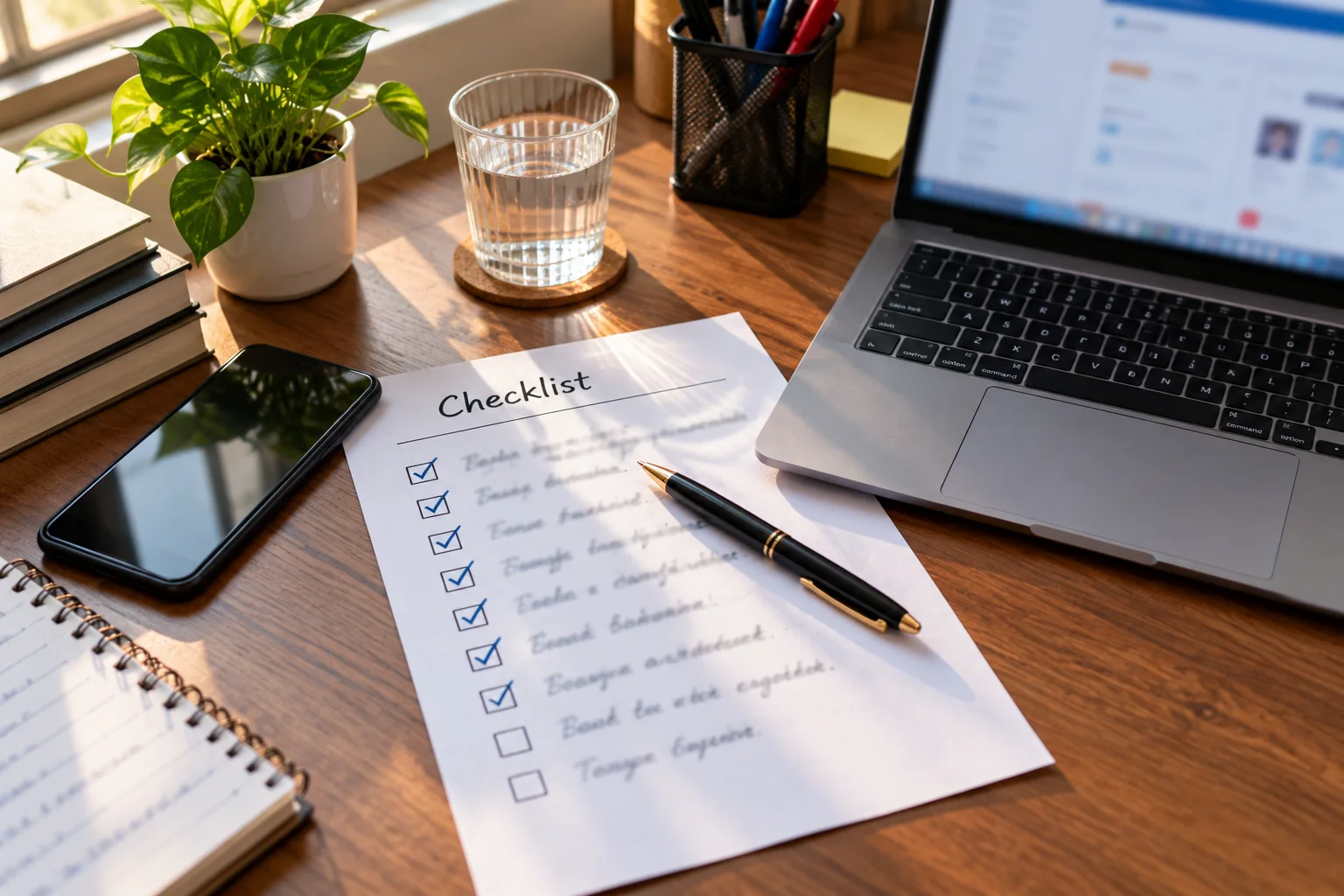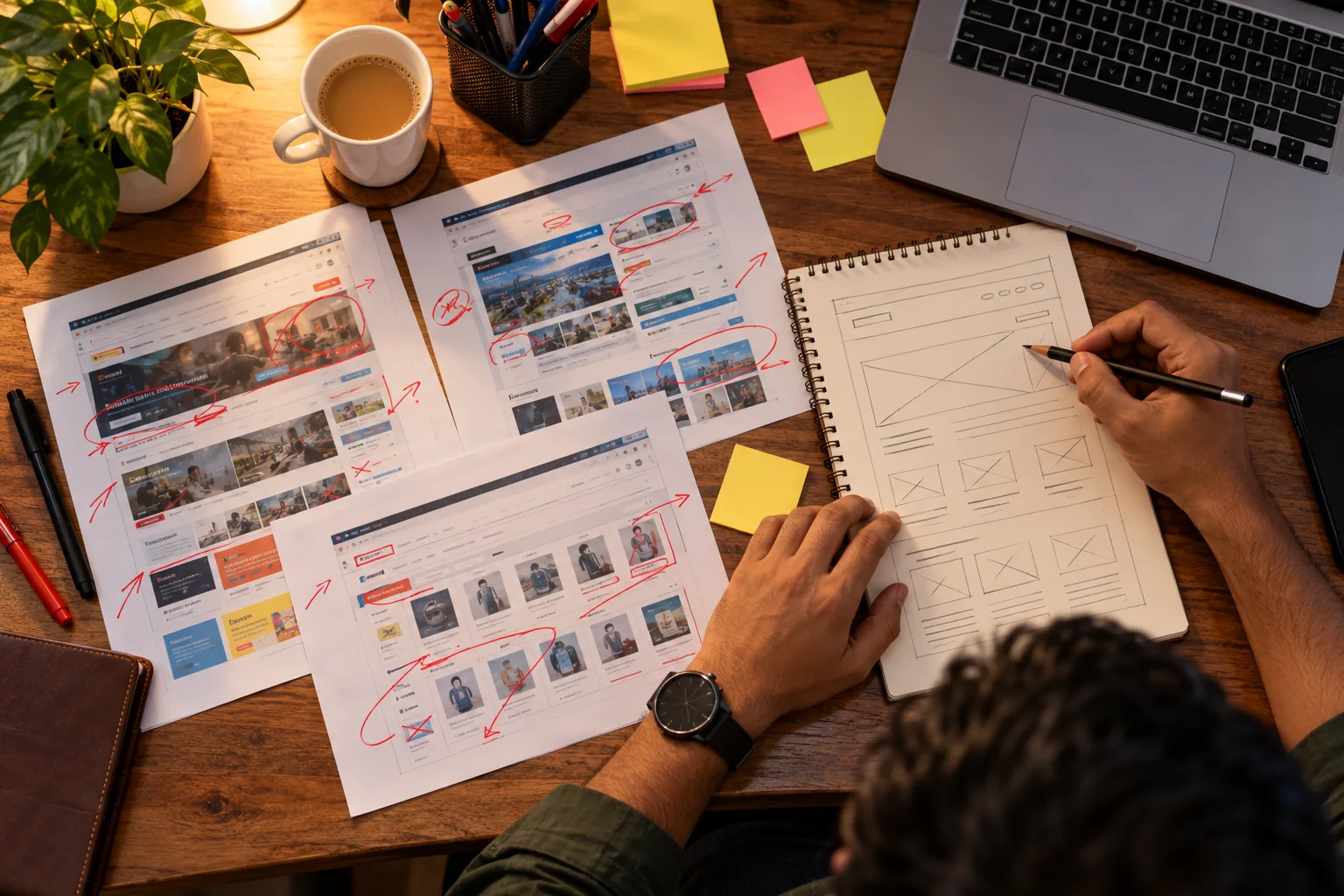
A good-looking website is not the same as a website that works. The sites that bring in customers share a handful of basics, and most of them are about clarity rather than decoration. Use this checklist to review your own site or to brief a designer.
The essentials
- A clear headline: within a few seconds a visitor should know what you do, who it is for and where you are.
- One obvious action: choose the main thing you want visitors to do, such as call, book or request a quote, and make that button easy to find.
- Mobile-first layout: most visitors arrive on a phone, so text, buttons and forms must be comfortable on a small screen.
- Fast loading: slow pages lose visitors before they read a word.
- Trust signals: reviews, client logos, certifications and real photos show that you are a real, reliable business.
- Simple navigation: a short menu with plain labels beats clever names every time.
- Contact details everywhere: phone, WhatsApp and address should be one tap away from any page.
- Helpful content: service pages, pricing guidance and FAQs answer the questions that stop people from enquiring.
- SEO basics: clear page titles, descriptions, headings and a Google Business Profile help local customers find you.
- Analytics: you cannot improve what you do not measure, so track visits, calls and form submissions.
Where most websites go wrong
The most common problems are vague headlines, too many competing buttons, slow image-heavy pages and contact details hidden in the footer. None of them needs a full rebuild to fix, only a clear plan.
Review it every quarter
Your business changes, and so should your website. Update prices, add new projects and testimonials, and check that every form and phone link still works.
Written by the Delhi Digital Developer team
We design and build fast, beautiful websites for businesses across Delhi and India. Have a question about this article? We’re happy to help.
Talk to our team